
An apartment in El Escorial (Madrid), well connected —in fact, a step from the train station—. That closeness, sold in the listing as an advantage, had a flip side that Hogarfax's report put into numbers: the railway line runs 14 metres from the home. The buyer walked away. A real, anonymised case.
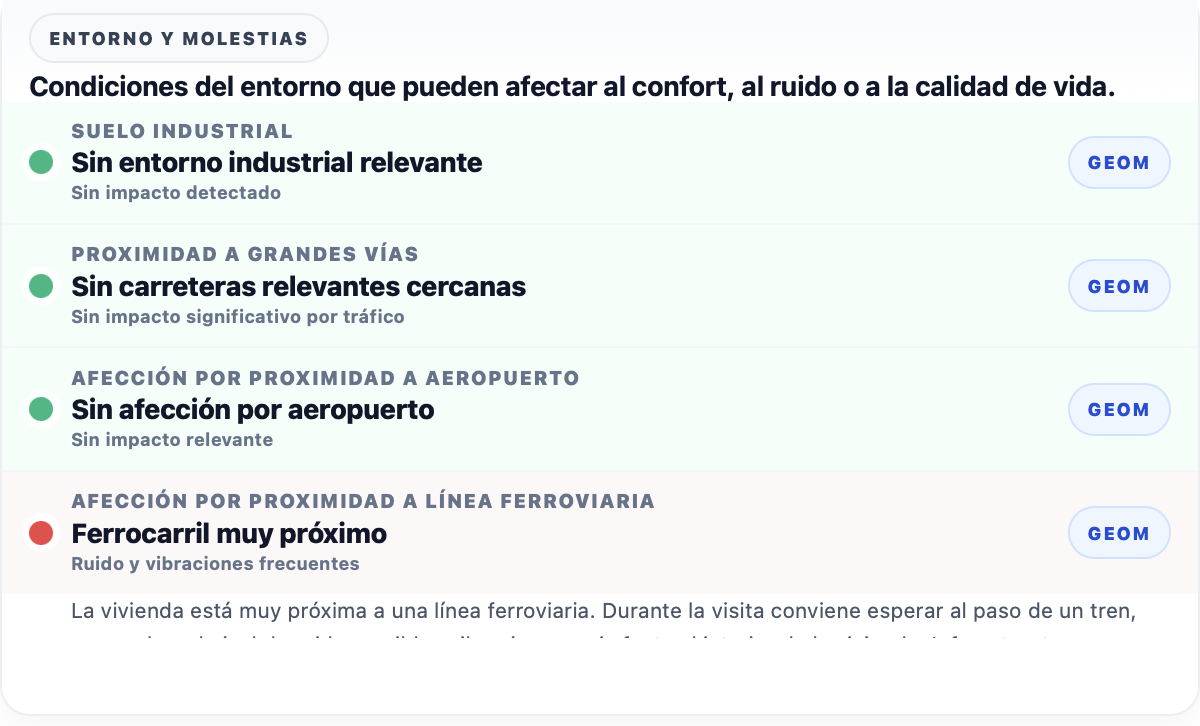
«Railway very close»: noise and vibrations
The report was clear: «Railway very close», with frequent noise and vibrations. «Being near the station» sounds good until you understand it also means living with trains passing a few metres away. Noise can be measured; structural vibrations, harder to notice on a ten-minute visit, are a real factor for comfort and for the building's condition. We cover it in road, airport and rail noise.
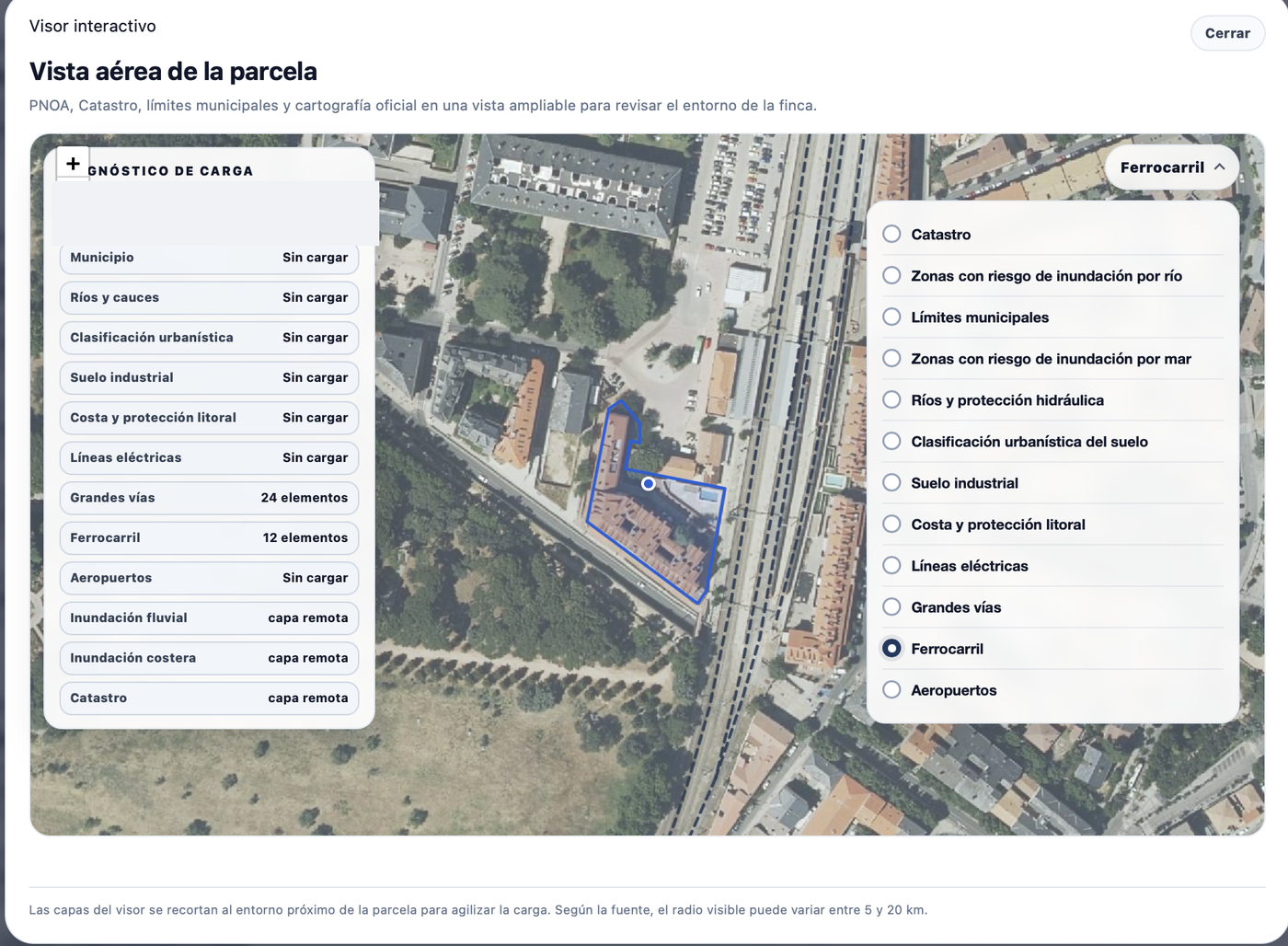
And here, again, the power of seeing it. In the viewer you switch on the railway layer and verify for yourself that the tracks run right beside the building, not «near» in an abstract sense. It is not a text to believe nor an AI estimate: it is the real geometry crossed with the official infrastructure mapping. The difference between «looks well connected» and «the train passes 14 metres from your living room».
A ten-minute visit won't tell you; the report will
If you visit the flat between two trains, it may seem quiet. The official figure does not depend on the luck of the hour: it tells you the infrastructure is 14 metres away, always. The buyer knew it before signing and decided that noise and those vibrations were not worth it. For 24.90 €.
Check a home's surroundings before you sign
Enter the address or cadastral reference and cross railways, roads, noise, flooding and more on the official map. For 24.90 €.
Analyse the propertyFuentes
www.boe.es/buscar/act.php?id=BOE-A-2003-20976
Was this article useful?
Your answer helps us improve the blog and understand which guides deserve more depth.